No products in the cart.
In the end, 8K is making its option to gaming displays — or at the very least, that is what Samsung’s new Odyssey Neo G9 2023 is pushing towards because it ushers in a brand new technology of gaming shows. However 8K is not new in itself — it has been within the mainstream gaming conscience for practically three years with GPUs and consoles — so why have not we seen extra 8K gaming displays?
As an period of next-gen shows begins to emerge, 8K feels prefer it ought to develop into the subsequent large gaming vacation spot. However do not buy the hype. It will be a very long time earlier than 8K gaming really catches on, and there are just a few large the explanation why.
What we have now now
There’s at present one 8K monitor in the marketplace — Dell’s UltraSharp UP3218Ok that sells for an obscene $4,000. It isn’t new both, releasing shut to 6 years in the past at this level. Which means it would not have connectivity like HDMI 2.1 or DisplayPort 2.1, and it is locked to a 60Hz refresh fee.
Displays evolve 12 months over 12 months, so it is unusual we have not seen extra growth in 8K on the monitor entrance. Essentially the most sensible motive has been the connection requirements. Even at a 60Hz refresh fee, an 8K monitor requires an information fee of round 50 Gbps. HDMI 2.1, which helps round 45Gbps of information, solely turned extensively supported in 2020, and DisplayPort 1.Four solely helps round 26Gbps.
There’s compression to assist displays just like the UltraSharp UP3218Ok, however merely put, there hasn’t been a cable and port that may switch the large quantity of information to an 8K decision requires.
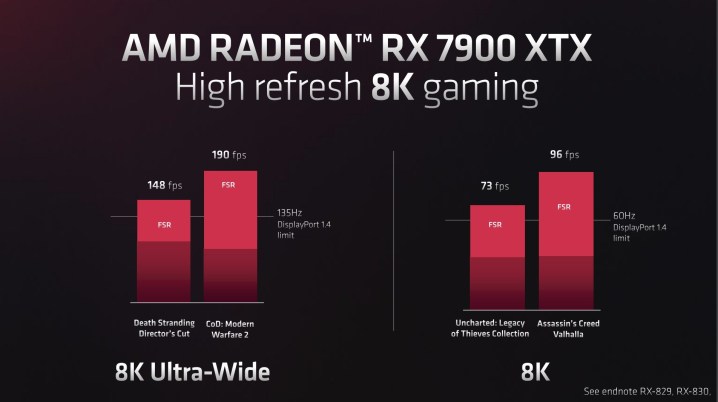
DisplayPort 2.1 modifications that. It presents an information fee of 78Gbps, and with the connection’s assist for 3:1 lossless compression, it may possibly assist 8K at 144Hz with Excessive Dynamic Vary (HDR) turned on. We did not have a port and cable that would switch sufficient knowledge for 8K gaming displays when the UltraSharp UP3218Ok launched, however we do now.
The ecosystem surrounding DisplayPort 2.1 is the issue proper now. AMD’s RX 7900 XTX and RX 7900 XT assist DisplayPort 2.1, they usually’re wildly highly effective GPUs, however Nvidia’s newest RTX 40-series graphics playing cards do not. Equally, the Xbox Sequence X and PlayStation 5 are locked to HDMI 2.1. That connection helps 8K at 60Hz, however these consoles aren’t practically highly effective sufficient to drive that decision (they are not even highly effective sufficient to drive native 4K).
 Jacob Roach / Digital Tendencies
Frankly, even one of the best graphics playing cards out there as we speak cannot drive 8K. The one GPU that is cheap is the RTX 4090, and an enormous a part of that’s as a result of that graphics card helps Nvidia’s Deep Studying Tremendous Sampling (DLSS) Three that may generate new frames with AI. It is necessary to keep in mind that 8K contains 4 instances the pixels as 4K, and most GPUs nonetheless battle with native 4K as we speak.
To drive this level dwelling, AMD launched unique 8K gaming footage of the upcoming Lies of P shortly earlier than this text was revealed. It seems spectacular, however are you able to watch the footage in 8K? Virtually nobody can, and that is the issue.
Lies of P – Unique 8K Gameplay Footage on Radeon RX 7900 XTX
On the very least, we’ll want to attend for next-gen Nvidia GPUs earlier than we have now a full PC ecosystem supporting DisplayPort 2.1, and even then, it may very well be one other few years earlier than we see displays supporting DisplayPort 2.1 at cheap costs. On prime of that, there’s a way more urgent motive 8K hasn’t made it to the monitor world fairly but.
Energy calls for

For those who’re a frequent Digital Treads reader, you will have learn that the EU might successfully ban 8K TVs subsequent 12 months. Why? Energy calls for. Because the 8K Affiliation, a gaggle of 8K trade advocates, factors out: “Extra backlight energy is required to create the identical on-screen [brightness] because the equivalent-sized 4K TV.”
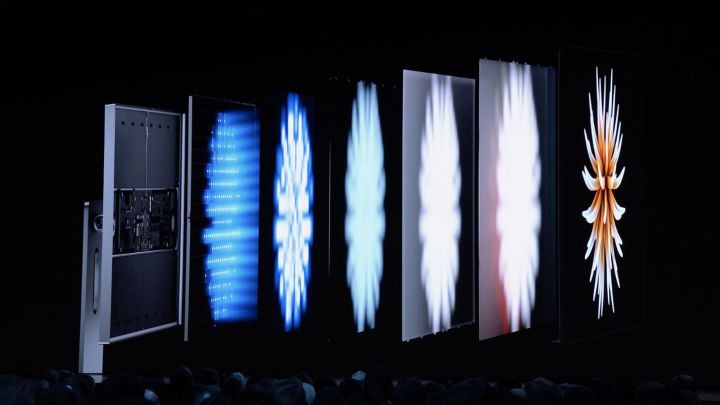
As decision will increase, the scale of every pixel will get smaller. And the smaller the pixel, the extra gentle from the backlight is critical to create cheap brightness. That Dell 8K monitor? It usually consumes round 90 watts of energy. The 4K model comes near 30W. That does not sound unhealthy — TVs can simply go above 100W and even larger — however that is the ability required when the display screen is on in any respect, not the utmost attainable energy. And gaming solely amplifies these energy calls for.
A premium 4K show just like the Samsung Odyssey Neo G8 consumes significantly extra energy (3 times as a lot or much more) as a typical 4K show on account of a excessive refresh fee and native dimming. The fee for additional energy is insignificant in most elements of the world, however extra energy means extra warmth.
It is arduous to say how a lot warmth. We do not have 8K gaming displays with excessive refresh charges flying round. I am speculating, however I think about the excessive backlight calls for mixed with premium options like excessive native dimming zones and a excessive refresh fee have created a hurdle for 8K gaming displays up so far, and a key consider that’s warmth.
There isn’t any ignoring the environmental affect, both. In accordance with the Lawrence Berkeley Nationwide Laboratory, PC gaming consumes extra electrical energy yearly than an electrical garments dryer, water heater, and area heater, solely being surpassed by lighting, air con, and refrigeration. Most of that vitality comes from the PC itself, however in an period of accelerating GPU and CPU energy calls for, it is arduous to justify including extra energy by a show and forcing your system to work even more durable.
This is not an unsolvable difficulty. LCD backlights have gotten remarkably environment friendly, and that is primarily as a result of there’s a lot vitality wasted by the varied levels of a display screen. In contrast, OLED would not have that vitality loss, however OLED know-how is not practically as environment friendly proper now. Additional optimizations in OLED might make it much more energy-efficient, and we’re already seeing that now. For instance, eLeap is an rising OLED know-how that may vastly cut back vitality consumption by rising the sunshine throughput with every OLED pixel.
Between energy, warmth, and environmental affect, there is not a single space that utterly kills 8K gaming displays. After they’re mixed, nevertheless, they symbolize an enormous hurdle for prime refresh fee 8K displays, at the very least for the subsequent few years.
8K gaming, ultimately
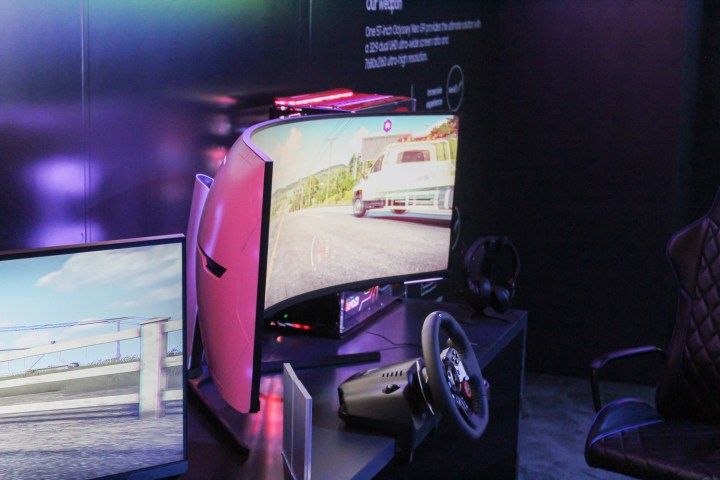
We’re shifting into a brand new period of gaming displays, and the 2023 Samsung Odyssey Neo G9 is proof of that. Nevertheless, it’s going to nonetheless take just a few years for connection requirements to extensively assist excessive refresh fee 8K shows, in addition to to develop effectivity requirements to reduce the ability calls for of such a excessive decision.
One factor is for certain: monitor manufacturers will proceed to push 8K as the subsequent vacation spot for gaming. We have seen it for just a few years on the graphics card and console entrance, and displays are beginning to catch up. On this case, it in all probability will not pay to be an early adopter — there’s nonetheless quite a lot of growth we have to see in 8K and the {hardware} the allows it earlier than it is a viable possibility for gaming.

Right now’s tech information, curated and condensed on your inbox
Verify your inbox!
Please present a sound e mail deal with to proceed.
This e mail deal with is at present on file. If you’re not receiving newsletters, please examine your spam folder.
Sorry, an error occurred throughout subscription. Please attempt once more later.
Editors’ Suggestions